Historical record · August–October 2026
How we got here.
These entries describe the project at their stated dates. Earlier incomplete work and old settings may have been superseded. For the present configuration and completed checks, see the current results.
Early assembly and development photographs
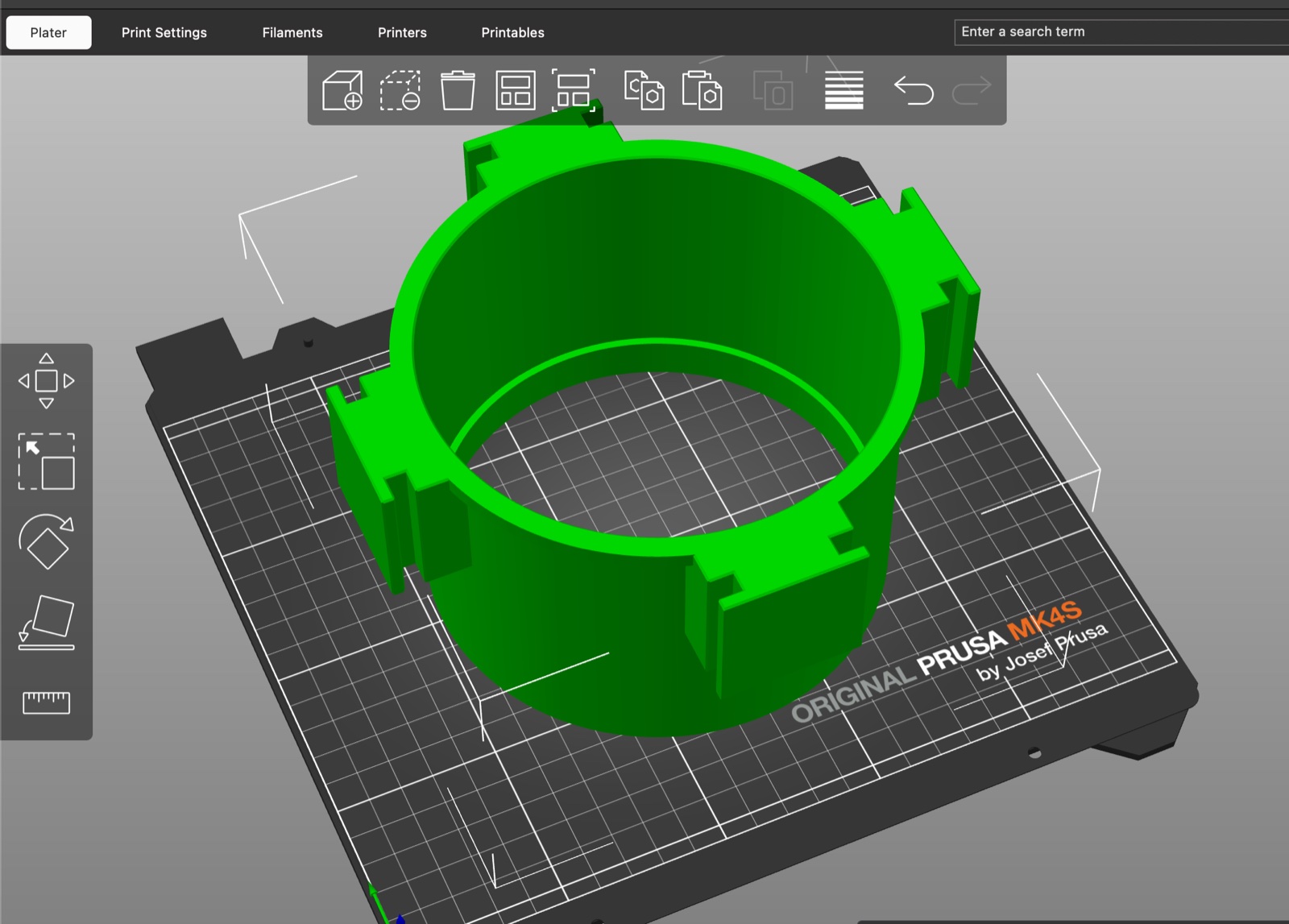
25 AUG · Fabrication snapshot
3D-print preparation
A PrusaSlicer view used to inspect the orientation and geometry of an EntoSieve component before printing. This records preparation; completed parts still require physical fit and quality checks.
Image supplied by Rui Jiang · 25 Aug 2026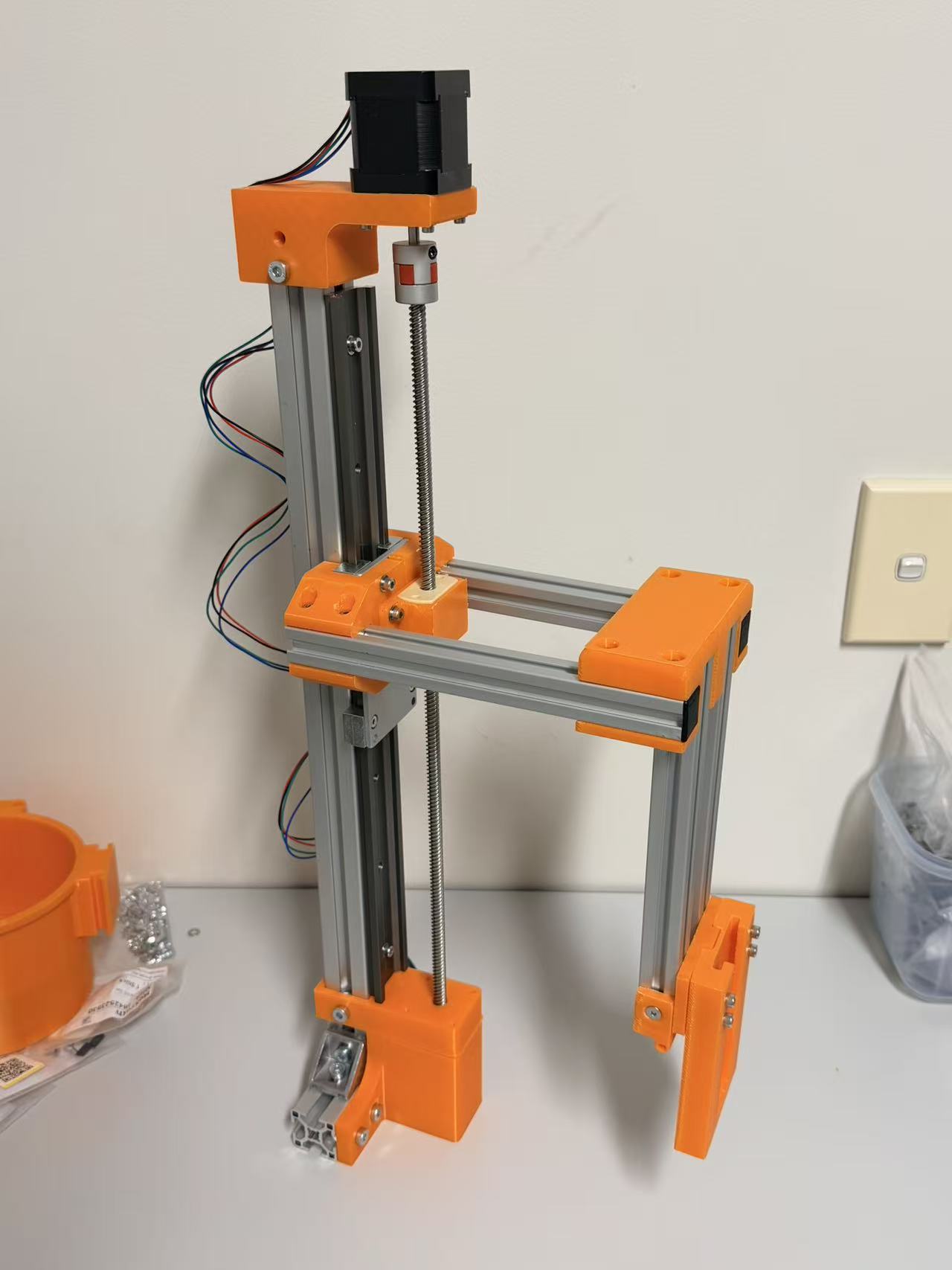
26 AUG · Assembly overview
Physical baseline taking shape
The main frame, vertical drive components and several printed interfaces have been assembled. This is physical build evidence, not yet evidence of alignment, complete wiring or successful operation.
Image supplied by Rui Jiang · 26 Aug 2026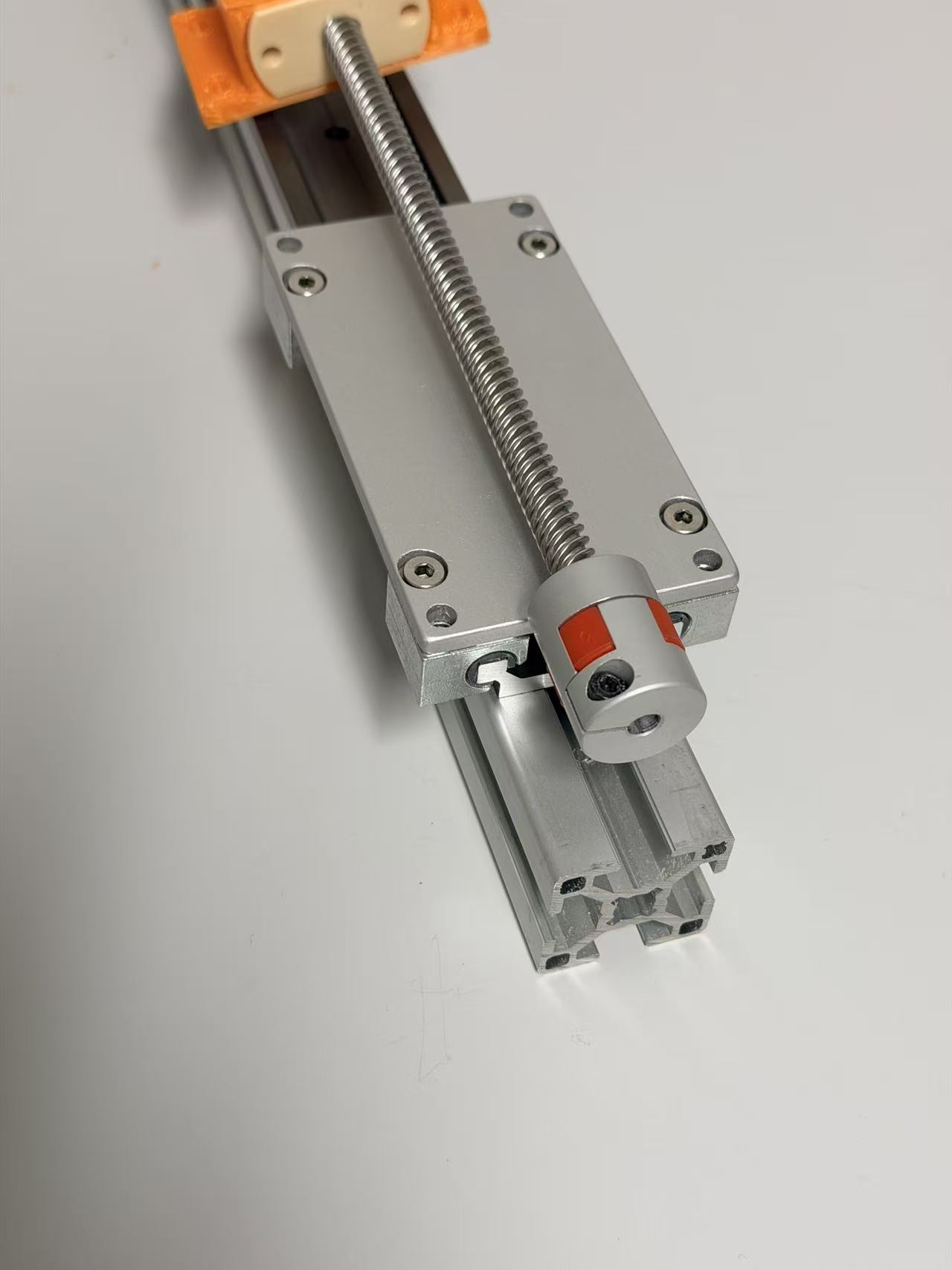
26 AUG · Drive detail
Lead-screw interface assembled
A close view of the lead screw, coupling and linear stage records their current physical relationship. Alignment and motion checks are still required.
Image supplied by Rui Jiang · 26 Aug 2026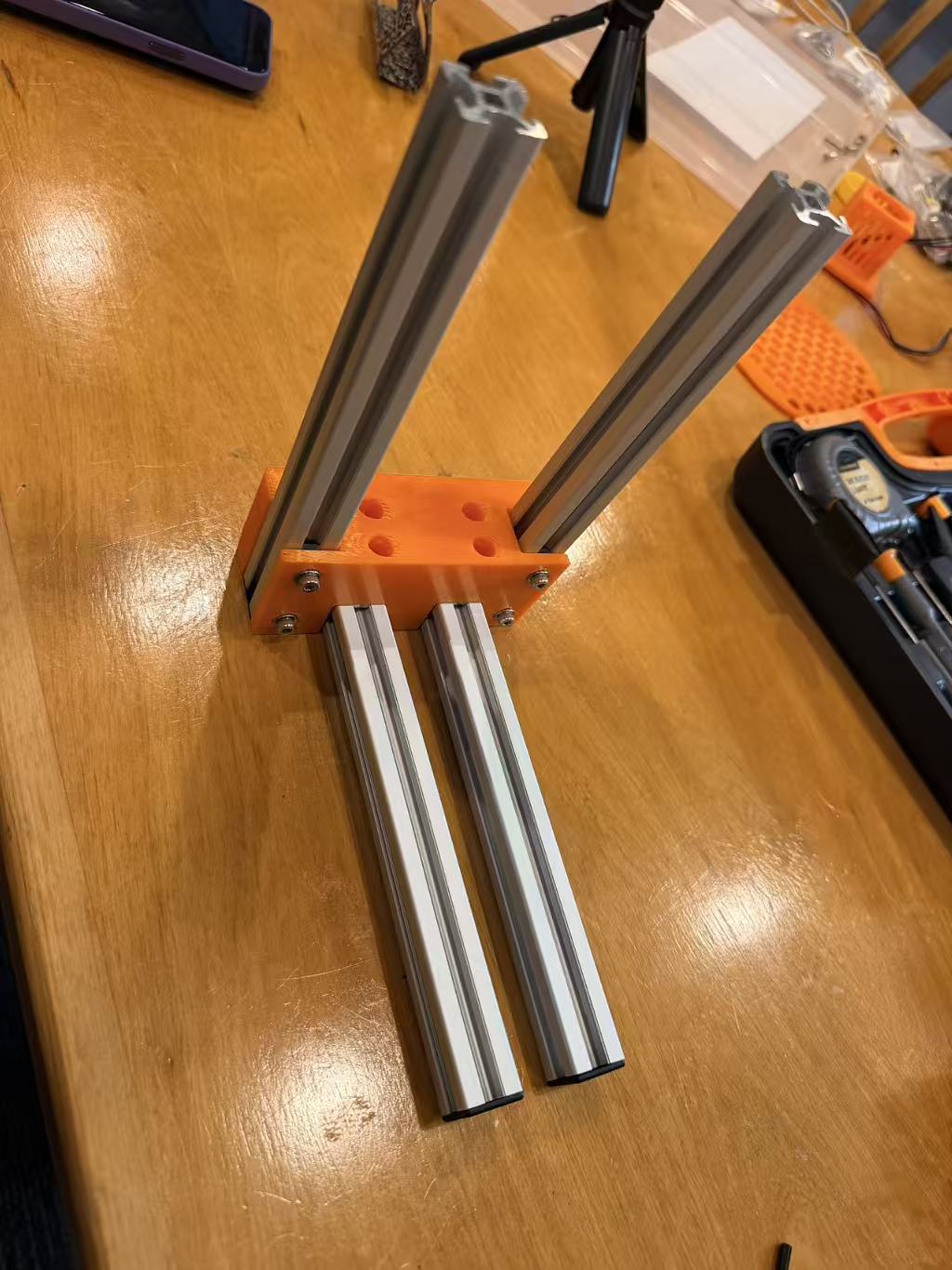
26 AUG · Frame subassembly
Printed connector fitted to the frame
This subassembly records how the printed connector brings the aluminium-extrusion members together before final frame integration.
Image supplied by Rui Jiang · 26 Aug 2026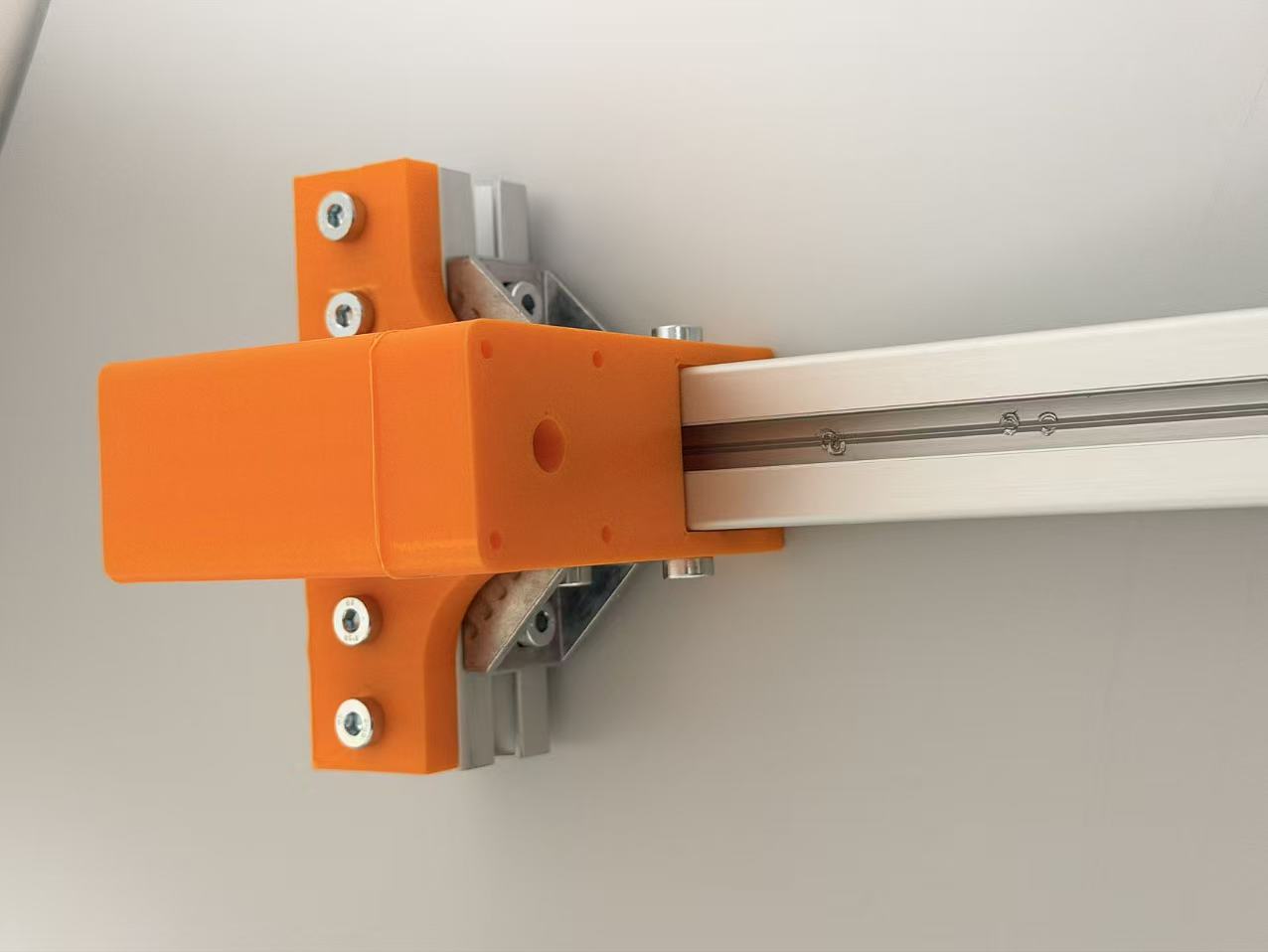
26 AUG · Installed interface
Fit checked during assembly
The installed interface provides direct assembly feedback on access, fit and the relationship between printed and metal parts.
Image supplied by Rui Jiang · 26 Aug 2026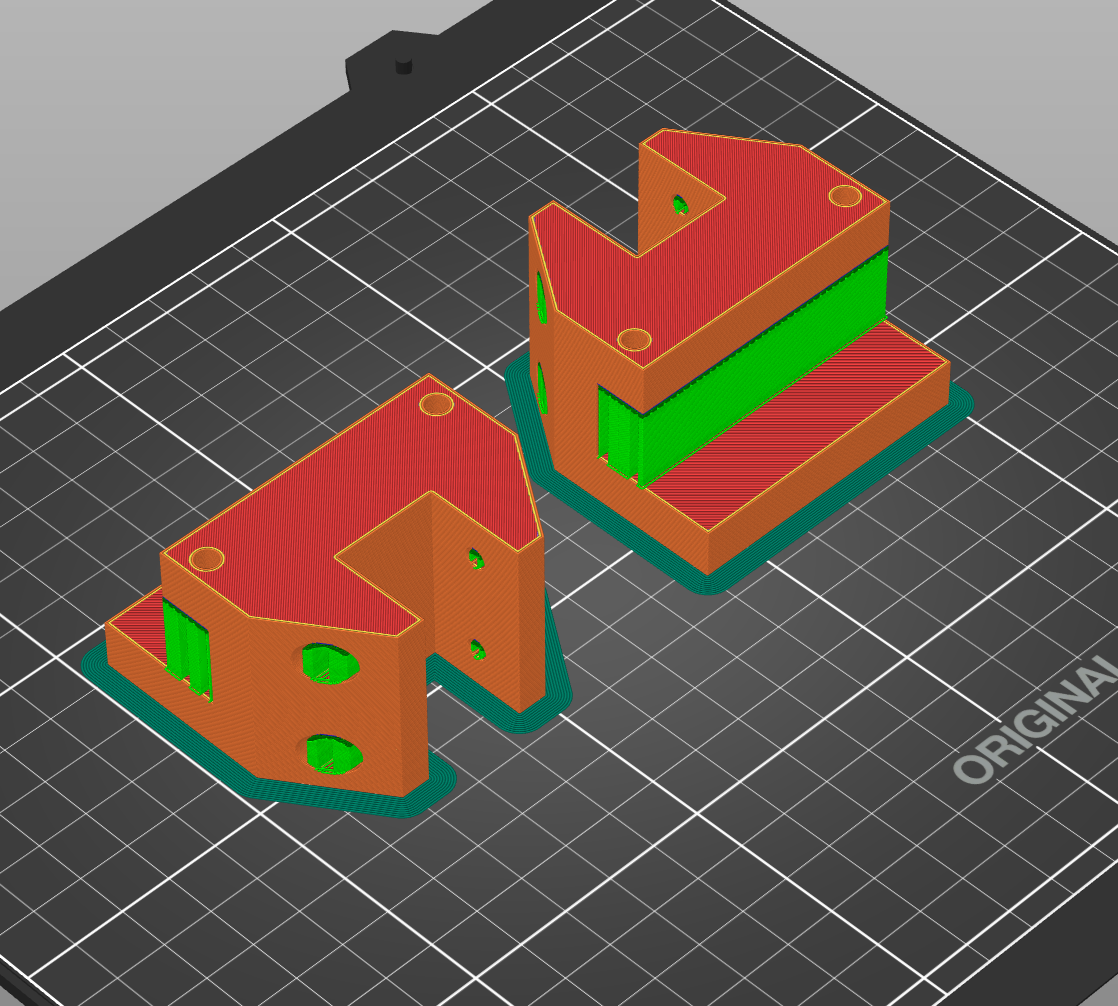
30 AUG · Design iteration
Adjusted parts prepared in the slicer
A revised paired component has been prepared after assembly feedback. The image records digital preparation only; printing, installation and verification remain pending.
Image supplied by Rui Jiang · 30 Aug 2026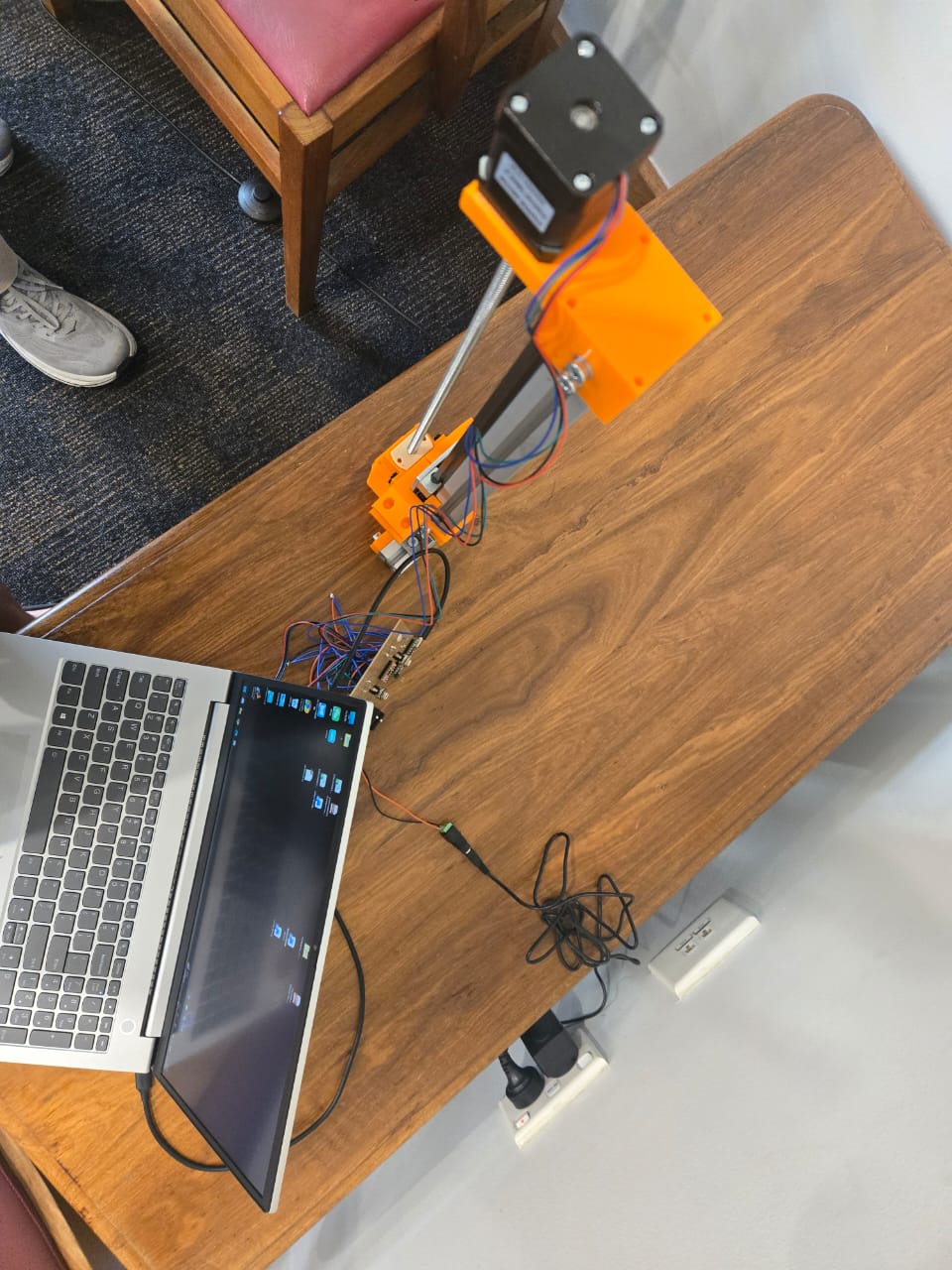
15 SEP · Initial commissioning
First powered bench configuration
The photograph records the drive stage, provisional wiring and computer setup used during early power-up. It supports the configuration record only; the observed but uncontrollable motion is reported in the dated update.
Image supplied by Rui Jiang · 15 Sep 2026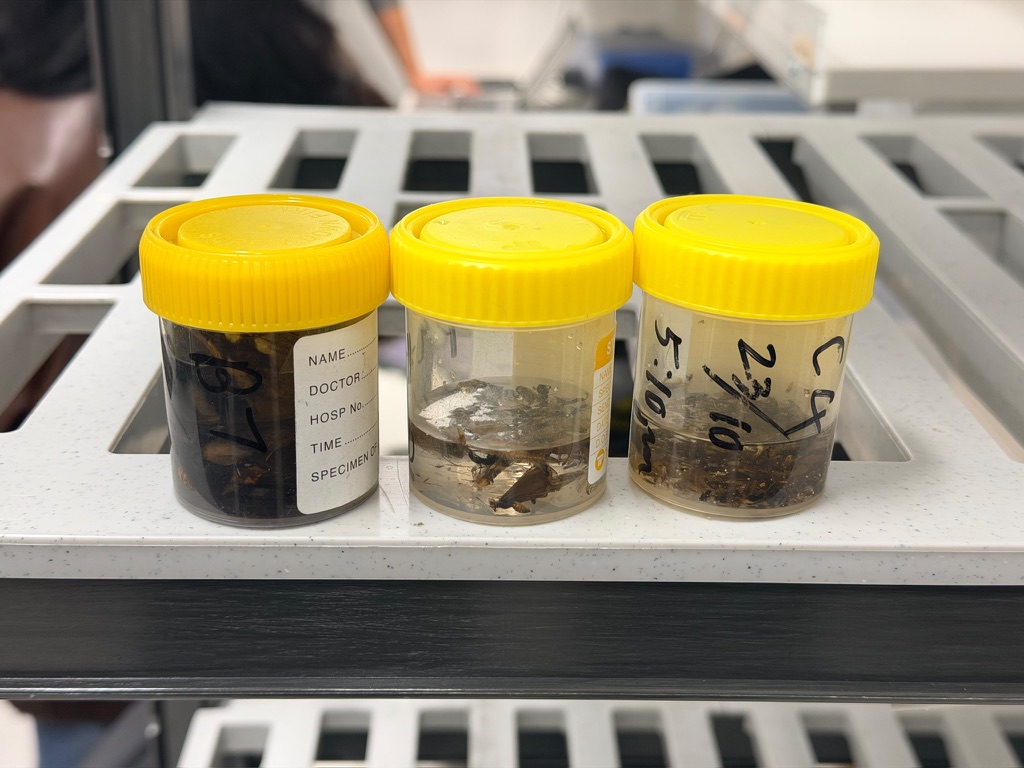
22 SEP · Baseline test
Three output groups collected
The initial baseline version completed the intended sorting task in this trial, with the separated material collected in three containers. The result demonstrates baseline function, while quantitative accuracy, repeatability and final acceptance remain to be verified.
Image supplied by Rui Jiang · 22 Sep 2026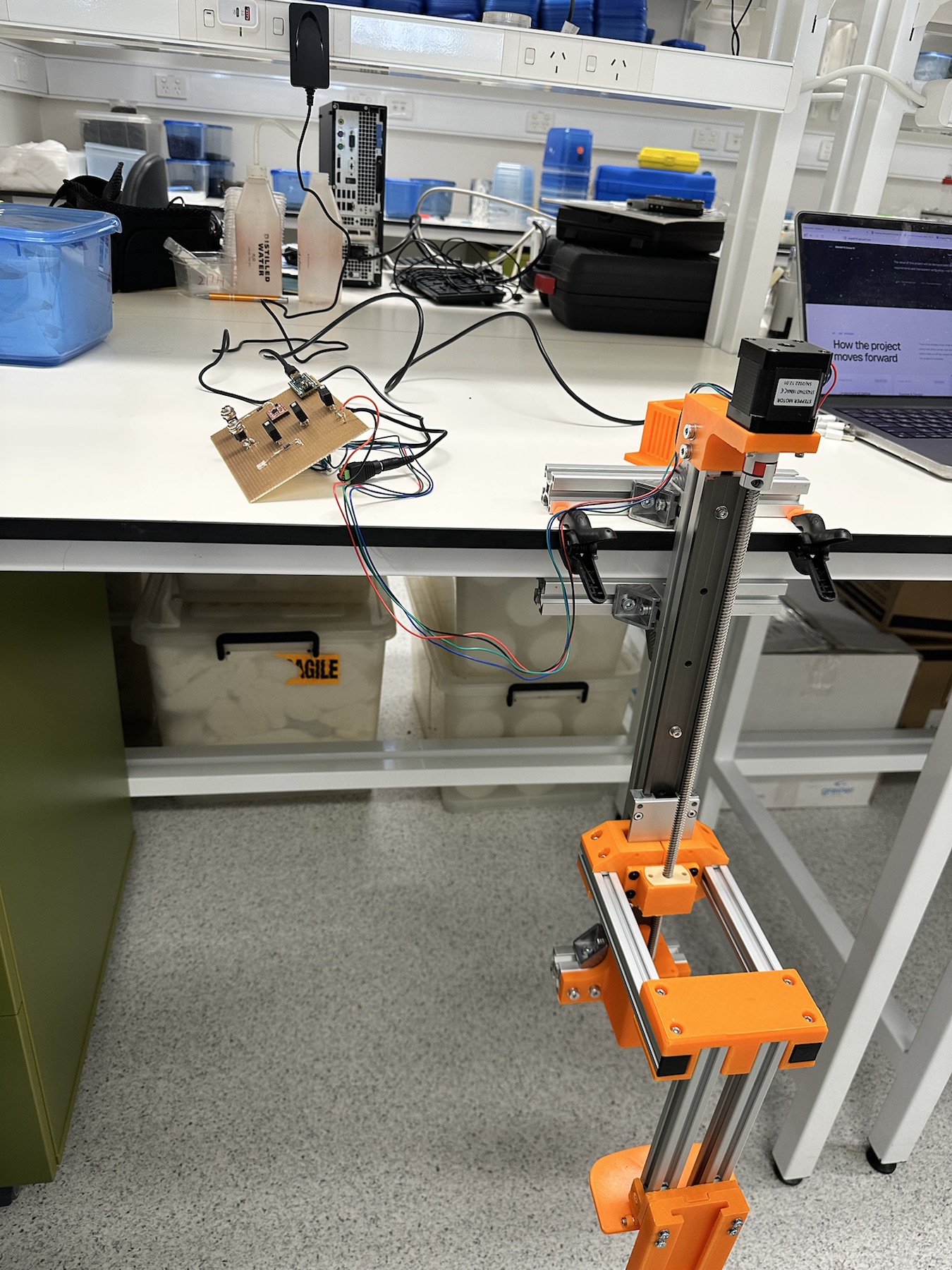
01 OCT · Control redesign
Three-button control in bench testing
The rotary-knob approach was difficult to use consistently, so the control design moved to three discrete push buttons. The photograph records the mechanical arm and bench prototype during functional checks; enclosure, electrical insulation and cable restraint remain unfinished.
Image supplied by Rui Jiang · 1 Oct 2026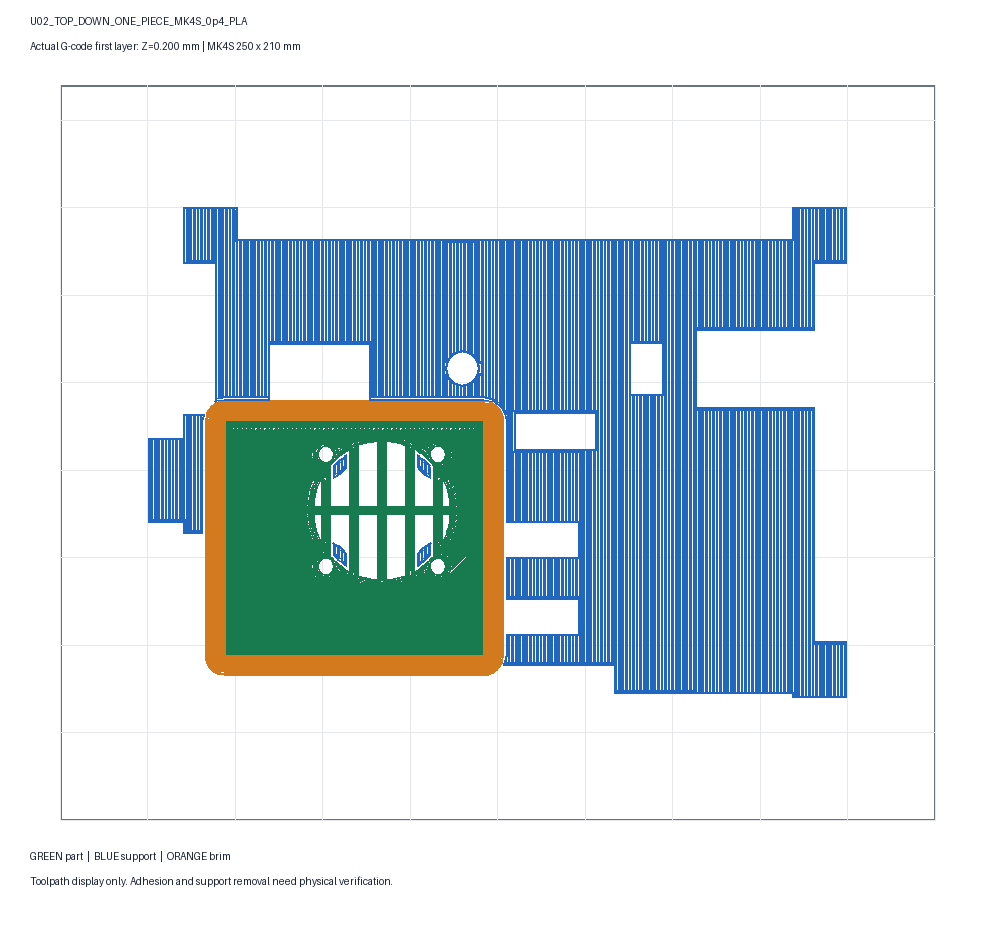
06 OCT · U02 slice preparation
Roof-down U02 toolpath prepared
This first-layer visualisation records the selected U02 roof-down slice. It supports digital manufacturing review only; the part still requires printing, support removal, physical fit, airflow-direction and instrumented temperature checks.
Generated from the selected U02 print package · 6 Oct 2026Operating boundaries clarified with the clients
Status recorded then: Confirmed
The client meeting record confirms the maximum-body-dimension sorting rule, the three size groups, RN Robertson laboratory controls and client stop authority. Quantitative sorting-performance and specimen-damage acceptance criteria remain pending.
Audit 1 feedback converted into an action plan
Status recorded then: Working record
Audit findings, follow-up actions, affected artefacts and source links have been consolidated into a control register. The current priority is to close the gap between strong planning and demonstrated build-and-test evidence before Audit 2.
A staged test path is being prepared
Status recorded then: Working plan
The test path now runs from dry mechanical and electrical checks through motion integration, wet checks and end-to-end trials. Results remain Not Started until dated evidence is captured.
Controlled project files have moved forward
Status recorded then: Controlled review
ConOps v1.5 corrects the lower group to d ≤ 3 mm and supersedes earlier lower-bound wording. PMP v0.5 remains the current Audit 1 review snapshot, while Test Plan v1.0 is a working plan. These labels do not imply formal approval or completed testing.
Hardware preparation is nearing completion
Status recorded then: Build in progress
Physical hardware is largely prepared, and the team reports that most 3D-printed parts are complete. Receipt checks, fit and quality checks, assembly and as-built recording remain in progress.
The baseline frame has moved into assembly
Status recorded then: Assembly in progress
The aluminium-extrusion frame, linear stage, lead screw, motor and printed mounting interfaces have been brought together in the current assembly. The photographs record physical progress; final alignment, wiring, full-motion, load and safety checks remain open.
Assembly feedback has driven a part adjustment
Status recorded then: Prepared for fabrication
Fit observations from assembly were used to adjust a paired mounting or support component. The revised geometry has been prepared in the slicer; printing, installation and verification are still pending.
First power-up produces uncontrolled motion
Status recorded then: Motion observed · control unresolved
The team completed its first power-up and attempted motion testing without the mechanical arm installed. Motion occurred, but it was not controllable. This early commissioning result does not demonstrate controlled motion, complete assembly, sample testing or formal acceptance.
The initial baseline completes the sorting task
Status recorded then: Baseline function demonstrated
In the 22 September trial, the initial baseline version completed the intended sorting task and produced three collected output groups. This demonstrates basic task completion for that baseline trial; it does not yet establish quantitative classification accuracy, repeatability, specimen-damage performance or final acceptance.
Three-button control replaces the rotary-knob approach
Status recorded then: Design updated · passed at stated scope
The rotary knob was difficult to use consistently during bench operation, so the team updated the control design to three discrete buttons. Hardware checks confirmed hold-to-move manual operation at 15 mm/s, D2 up or faster, D3 down or slower, and D4 start or stop. Oscillation uses a 30 mm total stroke, defaults to 50 mm/s, and adjusts from 25 to 75 mm/s in 5 mm/s steps. Reset, held-button, stop/restart and centre-update behaviours also worked. Earlier 136-host scenarios remain software evidence and do not replace this hardware record.
Three-setting oscillation timing shows the expected trend
Status recorded then: Measured · mechanical arm only
With no bucket or material installed, user-timed 10-cycle trials gave mean frequencies of 0.389 Hz at 25 mm/s, 0.814 Hz at 50 mm/s and 1.171 Hz at 75 mm/s. These results describe mechanical-arm cycle timing, not instantaneous speed accuracy or whole-system acceptance.
System-level testing remains open
Status recorded then: Open / blocked
A two-minute arm-only run at 50 mm/s showed no reported abnormal behaviour, but overall stability remains partial until bucket retention is finished. Electrical insulation and cable restraint, empty-bucket and loaded running, temperature rise, fan operation, wet sieving and drainage checks are still pending or blocked by prerequisites.
The public story and A1 poster move into development
Status recorded then: Communication package in development
The team began preparing an A1 poster, a public 3D-model pathway and a clearer visual account of the machine, controls and wet end. The public story connects insect size sorting to biodiversity research and explains the water-assisted sieve motion. These materials communicate existing work; they do not create new test evidence or acceptance.
The current six-screw wet end completes scoped checks
Status recorded then: Reported passed · stated scope
Rui reports full up-and-down travel without vertical wobble, secure operation in clean water and a passed bowl-and-connection leak check by Jianchen. Zhishuai reviewed the mechanical and clean-water results without requesting a mechanical modification. Long-term fastener corrosion and specimen-performance acceptance remain outside these checks.
The controller body advances while U01 remains in production
Status recorded then: Mixed completion · U01 pending
B01 and S05R are printed, cleaned and mutually fitted; H01 and H02 are printed; the controller fasteners are received; and Jianchen's insulation work is reported complete. The latest record still has U01 printing, with completion, support cleanup, fan fit, installation, airflow and instrumented thermal checks Pending.
Integrated upper design reduces difficult fastening operations
Status recorded then: Digital evidence complete · physical verification open
U01 combines the former hood, transition duct and guard into one printable part, removing four sleeves and four duct-joint fastener stacks while keeping the fan replaceable. Independent geometry and reproducibility checks passed at their digital scope; real support removal, fit, airflow and temperature performance remain unverified.
U02 moves the fan above the A4988 region
Status recorded then: Digital and slice checks passed · physical Pending
After U01 support removal proved difficult and several small fan and outlet features broke, the upper was redesigned as U02. The lid, hood, fan frame and grille now form one printed part, with a horizontal fan above the A4988 reference region and intended top-down airflow. The generator passed 89 checks and an independent review passed 49 checks. The selected roof-down slice estimates 6 h 43 min 37 s and 169.58 g including 93.92 g of support; these are digital estimates, not evidence of a successful print, fit or cooling result.
The team demonstrates the specimen workflow
Status recorded then: Workflow demonstrated · feedback recorded
The team demonstrated the specimen workflow to project stakeholders. The record identifies Rui, Megan, Josh and Sanika; complete attendance, time and room were not recorded. Josh and Megan were visually satisfied with the workflow. An external participant suggested slower motion, fewer water-surface crossings, an enclosed and smoother bucket, a tank-style vessel, a metal sieve, clearer switch labels and removal of unused switches. No mandatory redesign or final acceptance was recorded.
The U02 enclosure and fan complete scoped physical checks
Status recorded then: Installed · passed at recorded scope
The controlled record now confirms U02, the cover and fan are installed and functioning. Separate ten-minute unloaded and bucket runs, a clean-water cycle, and a ten-minute 500-cycle water-loaded run with the lid closed were completed without reported problems. Cooling paths were unobstructed and cables remained clear of moving and wet zones. These results close the planned fit, function, airflow-direction and clearance checks; they do not establish an unrestricted thermal duty rating or final acceptance.
Demonstration feedback becomes a controlled retrospective record
Status recorded then: Minutes published · participant review pending
The 6 October discussion was documented and linked to ST-01, ST-02, ST-04, IT-10, ST-08 and ST-10. Sanika's video evidence and seven design suggestions were retained as follow-ups. The minutes make no new performance pass, design-adoption or acceptance decision; detailed outcomes remain in the Test Plan.
The installed controller configuration is reconciled with its wiring evidence
Status recorded then: Configuration recorded · evidence links under review
The controller record now distinguishes the installed three-button board from simplified reproduction diagrams and records the A4988 microstepping wiring used by the machine. Electrical measurements, insulation evidence and component references are being linked to their test cases without turning adapter ratings or recalled readings into new test results.
Completed verification is consolidated without reopening it
Status recorded then: 36 Passed · 7 N/A · 7 specimen-dependent
The current 50-case Test Plan records 36 Passed cases and 7 N/A cases. Three Partially Passed, one Blocked and three Not Started cases remain; all seven depend on the planned specimen experiment. File or traceability gaps are being closed as documentation work and do not retroactively cancel valid mechanical, electrical, control, wet-run or endurance results.
The reproduction package moves into structured gap review
Status recorded then: Package completeness under review
The team is reconciling the as-built machine against the manifest, BOM quantities, print settings, assembly instructions, firmware and source files. Superseded variants remain in labelled history. Unresolved hardware identity or quantity differences stay visible until direct evidence closes them, while already valid build and test results remain unchanged.
The A1 showcase story is rebuilt for public viewing
Status recorded then: Poster and display pathway under final proofing
The A1 layout now prioritises three-metre readability, a prominent title and QR pathway, the physical machine, specimen context and the bucket-design sequence. The story explains why insect samples are sorted and how the sieve moves through water. Final proofing checks all size-group notation against the controlled project definition before submission. The course showcase is scheduled for 29 October, 12 noon–2 pm, at ANU Sports Hall.
Audit preparation shifts to evidence navigation and package review
Status recorded then: File organisation in progress
The Audit 3 plan keeps one navigation index and one current authority for each document type, separates current records from Historical copies, links completed tests to dated evidence, and groups the as-built, configuration, reproduction and handover records. The remaining review covers the seven specimen-dependent cases, final delivery and acceptance, package completeness, and any unresolved as-built discrepancy.